
Mayor backs next wave of business-led clean tech innovation
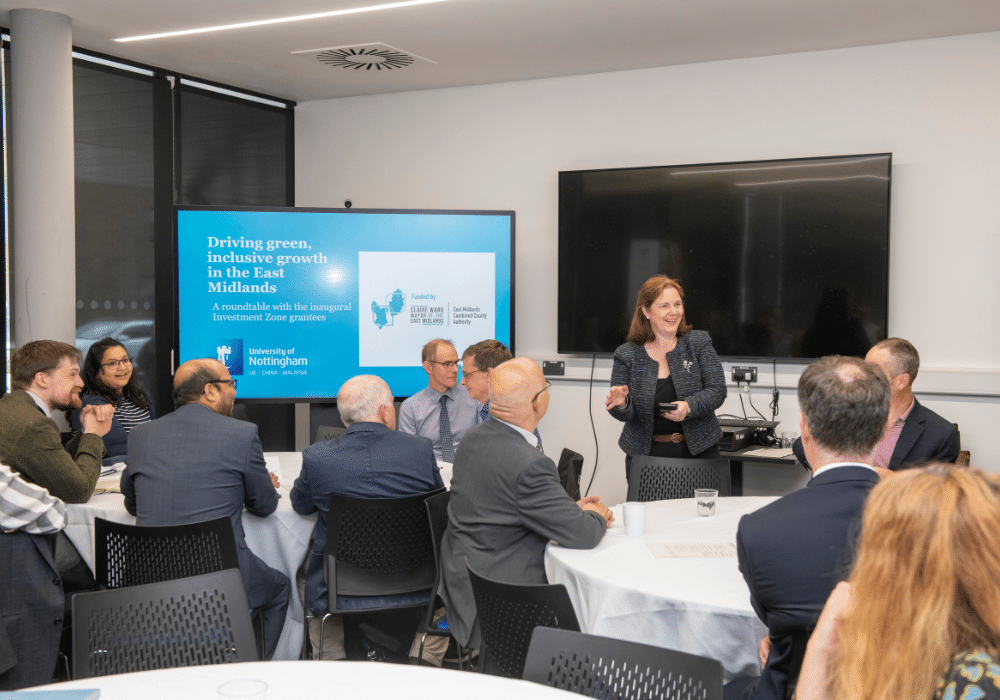
The Mayor of the East Midlands, Claire Ward, has launched the second year of her Innovation Accelerator Fund, investing £1.5 million in a grant scheme supporting a new cohort of business-led innovation projects.
Run through the East Midlands Investment Zone, the fund aims to support 32 businesses that are developing technologies which will help build the industries and supply chains that replace fossil-fuel-dependent markets, supporting the creation of jobs, investment and long-term economic growth across the East Midlands.
Mayor Claire said: “The East Midlands has all the ingredients to be a global leader in innovation, and we’re determined to make sure ambitious businesses – businesses that change the world – can thrive here. Through the East Midlands Investment Zone, we’re giving these companies the backing they need to develop cutting-edge technologies, bring new products to market and grow with confidence.
“Ultimately, it is being flexible and innovative that gives businesses staying power. As such, this investment will create skilled jobs, attract further investment, and build the industries that will shape the future of our economy for generations to come.”
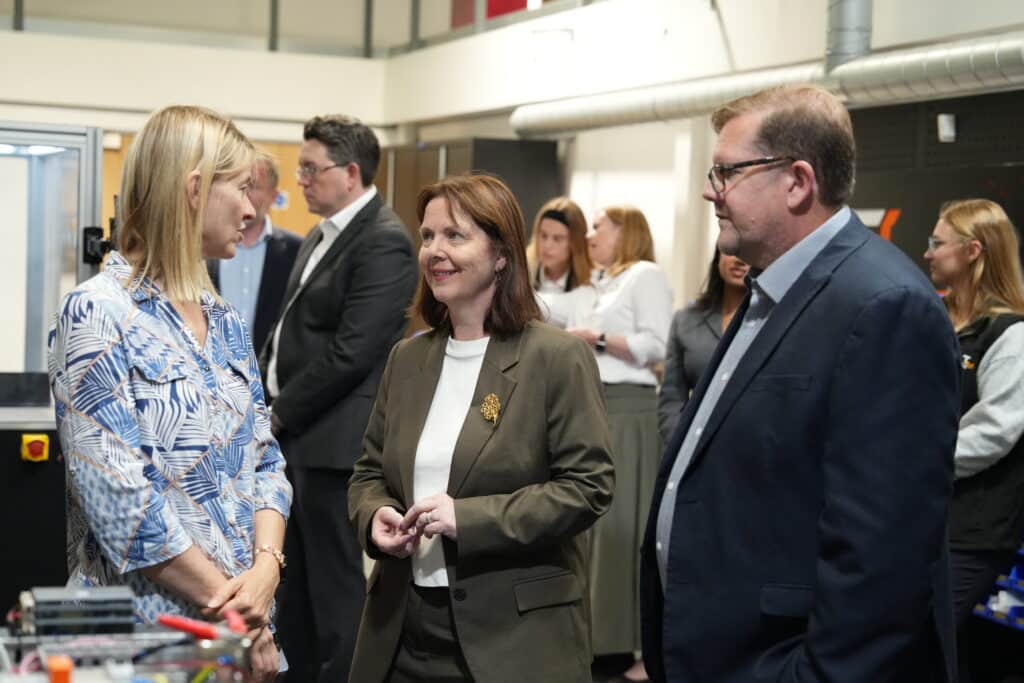
Building on a successful pilot programme which funded 15 university–business collaborations in 2024/25, the latest round supports 32 businesses, ranging from early-stage startups to established global firms. The projects span clean energy, zero-emissions propulsion, sustainable advanced manufacturing and nuclear technologies.
Together, these projects are helping regional businesses develop new products, strengthen supply chains and unlock commercial opportunities in rapidly growing clean-technology markets.
The programme continues to bring together businesses and researchers from the University of Nottingham, the University of Derby and Nottingham Trent University to accelerate innovation and shorten the path to commercial deployment.
Innovation programme
The programme is designed to turn research into real-world impact, generating new intellectual property, attracting follow-on investment, supporting business growth and creating high-value jobs across the region’s clean-energy economy.
This year’s projects showcase the breadth of innovation taking place across the East Midlands Combined County Authority (EMCCA) region, spanning sustainable aviation fuel, hydrogen-powered propulsion, advanced manufacturing, artificial intelligence, robotics and renewable energy.
Several projects are being delivered with established industrial partners, including East Midlands Pipeline, Intelligent Energy, Luxfer Gas Cylinders, GeoPura, Devtank, Added Scientific and The Thinking Pod Innovations. Their involvement reflects the growing concentration of clean-technology expertise across the East Midlands and the programme’s focus on supporting innovations with clear commercial and industrial potential.
The Innovation Accelerator Fund forms part of the East Midlands Investment Zone, a 10-year, £160 million programme to strengthen the region’s position as a centre for innovation-led growth, helping businesses develop new products, services and capabilities aligned to the region’s strengths and emerging clean technology markets. The programme is guided by the recently completed EMIZ Innovation Roadmaps, which were shaped through engagement with more than 170 stakeholders from industry, academia and regional innovation networks.
It builds on the universities’ shared commitment with EMCCA, set out in the East Midlands University Compact, to drive business growth, innovation and inclusive growth across the region. Together, EMCCA and the three universities are working to harness the region’s research and innovation strengths to support businesses, attract investment and create opportunities for communities across the East Midlands.
Prof Jane Norman, University of Nottingham president and vice-chancellor, said: “The East Midlands has the opportunity to become a national leader in clean technology innovation, and this programme is helping turn that potential into commercial reality.”
“Through our strengths in advanced manufacturing, transport decarbonisation and industry-focused research, we are working with businesses to accelerate the development of technologies that can create growth, attract investment and deliver real-world impact.”
Prof Kathryn Mitchell CBE DL, University of Derby vice-chancellor and chief executive, said: “The transition to clean energy will depend on innovation across the entire energy system, including the vital role that nuclear technologies will play in delivering reliable low-carbon power.”
“These place-based projects show the value of bringing together industry and academia to develop the technologies, expertise and supply chains that will support future economic growth in the East Midlands.”
Prof Richard Emes, Nottingham Trent University pro vice-chancellor research and international, said: “Innovation is about people as much as technology. To build new industries, we must also develop the skills, talent and capability needed to support them.”
“This programme is helping businesses access expertise and create opportunities that will equip the East Midlands workforce for the jobs and technologies of the future.”
The East Midlands Investment Zone programme is managed by the EMCCA and backed by £160m of Government funding.
Example projects
- Testing hydrogen aviation technologies for future aircraft applications (UoN, Intelligent Energy, Luxfer Gas Cylinders and GeoPura)
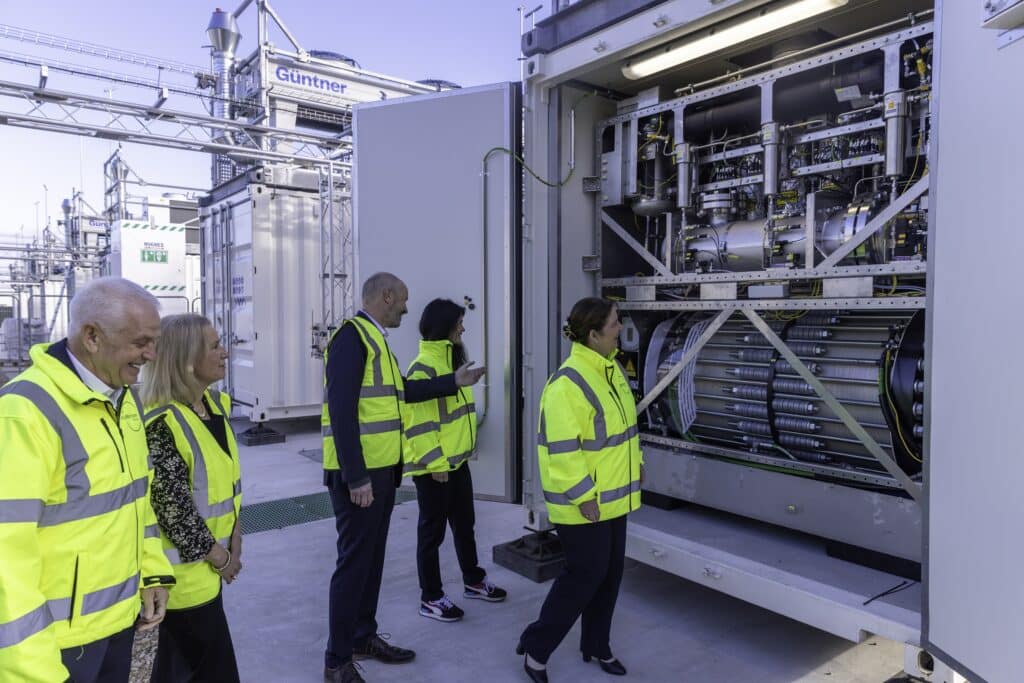
The University of Nottingham is working with Intelligent Energy, Luxfer Gas Cylinders, and GeoPura to test integrated hydrogen fuel-cell and hydrogen-storage technologies under aerospace-relevant conditions. The project will generate crucial performance data to support the future development and certification of hydrogen-powered aviation systems. - Smarter cooling systems for the trains of the future (Enspired Consulting and UoD)
Enspired Consulting and the University of Derby are exploring new ways to improve the efficiency of train cooling systems using artificial intelligence. The project aims to reduce energy consumption and improve performance on existing rail vehicles, while developing methods that could be applied to future low-carbon transport technologies. - DatAsk: turning manufacturing data into business insight (Devtank and NTU)
Devtank and Nottingham Trent University are developing an AI-powered platform that allows businesses to interact with complex manufacturing data using everyday language. The technology aims to help small and medium-sized manufacturers gain valuable operational insights without needing specialist data-analysis expertise. - Pragmatic Decarbonised Power Generation Using Ammonia Fuel (BlueDrive Propulsion, Mercia Power and UoN)
The University of Nottingham is partnering with BlueDrive Propulsion and Mercia Power to demonstrate the use of ammonia as a low-carbon fuel for grid-balancing power generation. Building on earlier feasibility work, the project will develop and test retrofit fuel and control systems for existing gas-powered generators, supporting lower-carbon electricity generation while creating opportunities for regional energy innovation and future commercial deployment. - Plasma technology for cleaner manufacturing and renewable energy (Aloeus Limited and UoD)
Aloeus Limited and the University of Derby are exploring how advanced plasma technology could support cleaner industrial processes and renewable energy systems. Potential applications include water-free cleaning of solar panels, protective coatings for manufactured products, improved performance in precision optics, and enhanced rail safety through better wheel-to-track adhesion. - Hydrogen power electronics for zero-emission propulsion (The Thinking Pod Innovations and UoN)
The Thinking Pod Innovations and the University of Nottingham are developing smaller, lighter and more efficient power electronic converters to improve the integration of hydrogen fuel cells with electric propulsion systems. Building on a previous EMIZ feasibility study, the project will develop and demonstrate optimised DC-DC converters and control algorithms to maximise fuel cell efficiency across different operating conditions, supporting zero-emission propulsion and sustainable advanced manufacturing. - From industrial emissions to cleaner flights: East Midlands explores a new future for sustainable aviation fuel (East Midlands Pipeline and UoN)
A collaboration between East Midlands Pipeline and the University of Nottingham is investigating how regional carbon dioxide sources, biogas infrastructure and industrial expertise could support the production of sustainable aviation fuel. The feasibility study combines technical, commercial and economic analysis with stakeholder engagement to assess viable technologies, supply chains, investment potential and regional benefits. - Autonomous solar-farm inspection using quadruped robotics (NextGenRi and NTU)
NextGenRi and Nottingham Trent University are investigating the use of four-legged robotic systems to inspect large solar farms. The technology could enable more frequent and detailed inspections, helping operators identify faults sooner, minimise downtime and improve safety across renewable energy sites. - Advanced silicone 3D printing for industry (Added Scientific and UoN)
Added Scientific and the University of Nottingham are helping bring advanced silicone 3D-printing technology closer to commercial use. The approach could reduce waste, lower production costs and enable rapid manufacture of customised components for sectors including manufacturing, healthcare and robotics. - Integrated Thermochemical Energy Storage for District Heating Networks (NRG Sense, Nottingham City Council and UoN)
A collaboration between the University of Nottingham, NRG Sense and Nottingham City Council, this project is assessing a novel thermochemical energy storage system for district heating networks. By capturing and storing heat that would otherwise be wasted, the technology could improve energy efficiency, increase network flexibility and support lower-carbon heating infrastructure, helping cities make better use of renewable and recovered heat resources. - AI-powered in-silico screening of product formulations (Boots & No7 Beauty Company)
Working with Boots and the No7 Beauty Company, University of Nottingham researchers are exploring how artificial intelligence can support faster product development. The project will test the feasibility of using AI to analyse consumer feedback and generate structured insights that can be used to screen new formulations before more resource-intensive testing takes place. The approach aims to improve development efficiency, reduce waste and support better informed product development decisions.
Published on: 21 September 2026
Categories: News, Economic Development