
Mayor at vanguard of supporting people with health conditions in employment

The East Midlands Combined County Authority (EMCCA) has been named as one of a dozen regional Vanguards – alongside more than 200 Vanguard organisations – helping build Britain’s first Workplace Health System.
The Workplace Health System is a new approach that brings together employers, the NHS, local leaders and support services, so people with health conditions get help early and do not fall out of work unnecessarily.
It comes as former John Lewis boss Sir Charlie Mayfield, who leads the Keep Britain Working programme, publishes a report showing how tackling worklessness could deliver one of the UK’s biggest opportunities for growth.
The move is part of the Keep Britain Working programme’s drive to tackle the £212 billion national cost of health-related economic inactivity and drive growth, including in East Midlands.
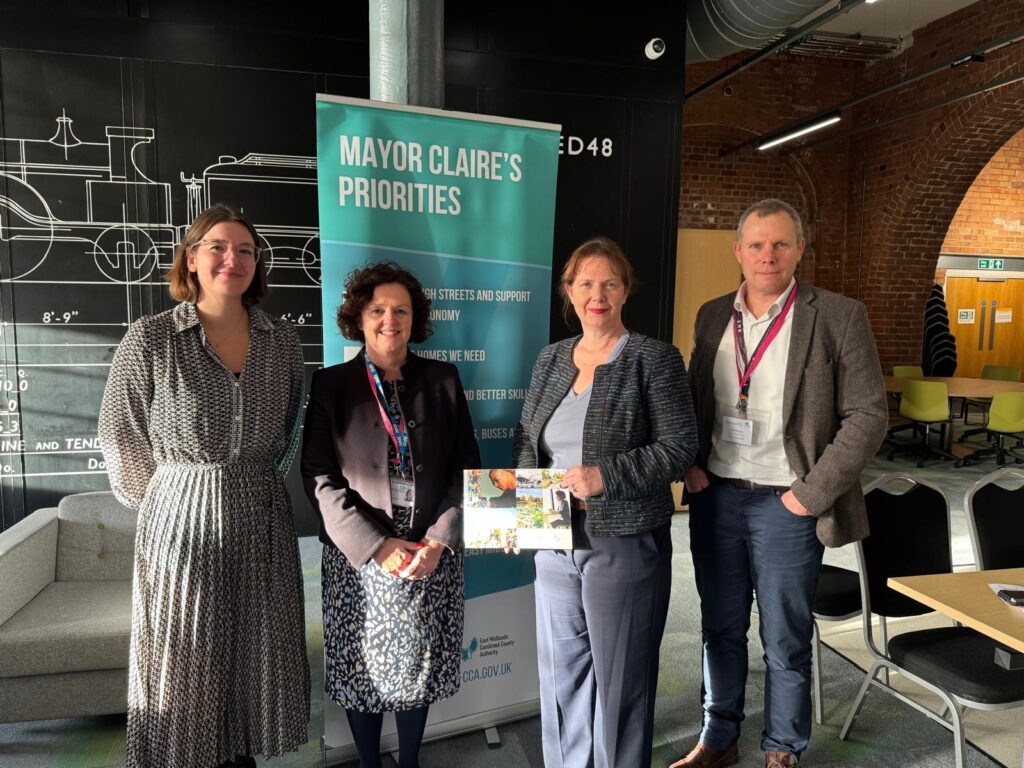
Mayor of the East Midlands, Claire Ward said: “Too many people find themselves out of work because of a health condition. This is a challenge shared across regions, but it is not inevitable. With the right support, we can stop people reaching that point.
“To do this, we need to bring all parts of people’s lives together – employers, health services, and community support – so people can get the right help at the right time. We also need to ensure that smaller businesses can access practical support to look after their staff.
“The East Midlands is helping develop new ways of making this work, underpinned by our Get East Midlands Working Plan. We know that getting help early can make a real difference and we want to learn from what works, so we can give more people the chance to stay in work.”
Challenge in communities
Across Britain, 2.8 million people of working age are economically inactive because of ill health or disability, while millions more are working with health conditions or facing barriers that limit what they can do. Across Derby, Derbyshire, Nottingham and Nottinghamshire, 102,700 people are off work due to being long-term sick, reflecting a challenge felt in communities right across the region.
An employer standard is also being developed with the British Standards Institution, alongside affordable support for smaller firms through pooled buying and insurance routes, so good workplace health support is not just available to big companies. This could be particularly valuable for the region’s small and seasonal businesses.
Few employers can currently tell how well they keep staff with health conditions in work, or whether people are still in work six months on. A new employer data project starting this autumn aims to fix that.
‘Growth opportunities’
Sir Charlie, author of the Keep Britain Working Review and co-chair of the Keep Britain Working programme, said: “Britain has spent too long treating economic inactivity as a welfare problem. It is not.
“Instead, it’s one of the largest and most attainable growth opportunities this country has.
“We’ve had a National Health Service for almost 80 years. We’ve never had a Workplace Health System. That is why the same people keep appearing on the welfare bill, on NHS waiting lists and in the productivity figures without anyone being able to join them up.
It’s also why we are missing the best moment to help people. The new Workplace Health System would change that.
“Ten months of building and testing with employers, mayors, providers, unions and disabled people have made us even clearer about what needs to change and more confident that a new system that helps to drive economic growth is within reach. The task now is to build it.”
Regional Vanguards
Eleven regional Vanguards, including nine Mayoral Strategic Authorities, and more than 200 Vanguard organisations are already building and testing the new system with employers, unions and disabled people across all four nations of the UK. EMCCA has been part of this effort, working alongside employers and providers across the region.
Work and Pensions Secretary Pat McFadden said: “Too many people fall out of work because of a health problem that could have been caught earlier, and too many employers have no way of knowing whether they are getting this right.
“This programme is working hand in hand with employers, mayors and local leaders, including in East Midlands, to change that, so that good workplace health support is not just for big companies and delivers growth across every postcode.”

For 10 months, the programme has been developing ideas for a new system with employers, providers, places, unions and disabled people across all four nations of the UK, with local projects exploring different elements.
Over the next year the programme will test the employer standard and the workplace health support model with Vanguards, including partners in East Midlands, and build the evidence on what works.
This progress sits within a £3.5 billion employment support package. WorkWell, backed by £259m, will support up to 250,000 people to stay in or return to work. Connect to Work supports 628 sick or disabled people in East Midlands with tailored support. More than 1,000 full-time Pathways to Work advisers are already in place across Britain, including in East Midlands.
Published on: 24 September 2026
Categories: News, Skills and Employment